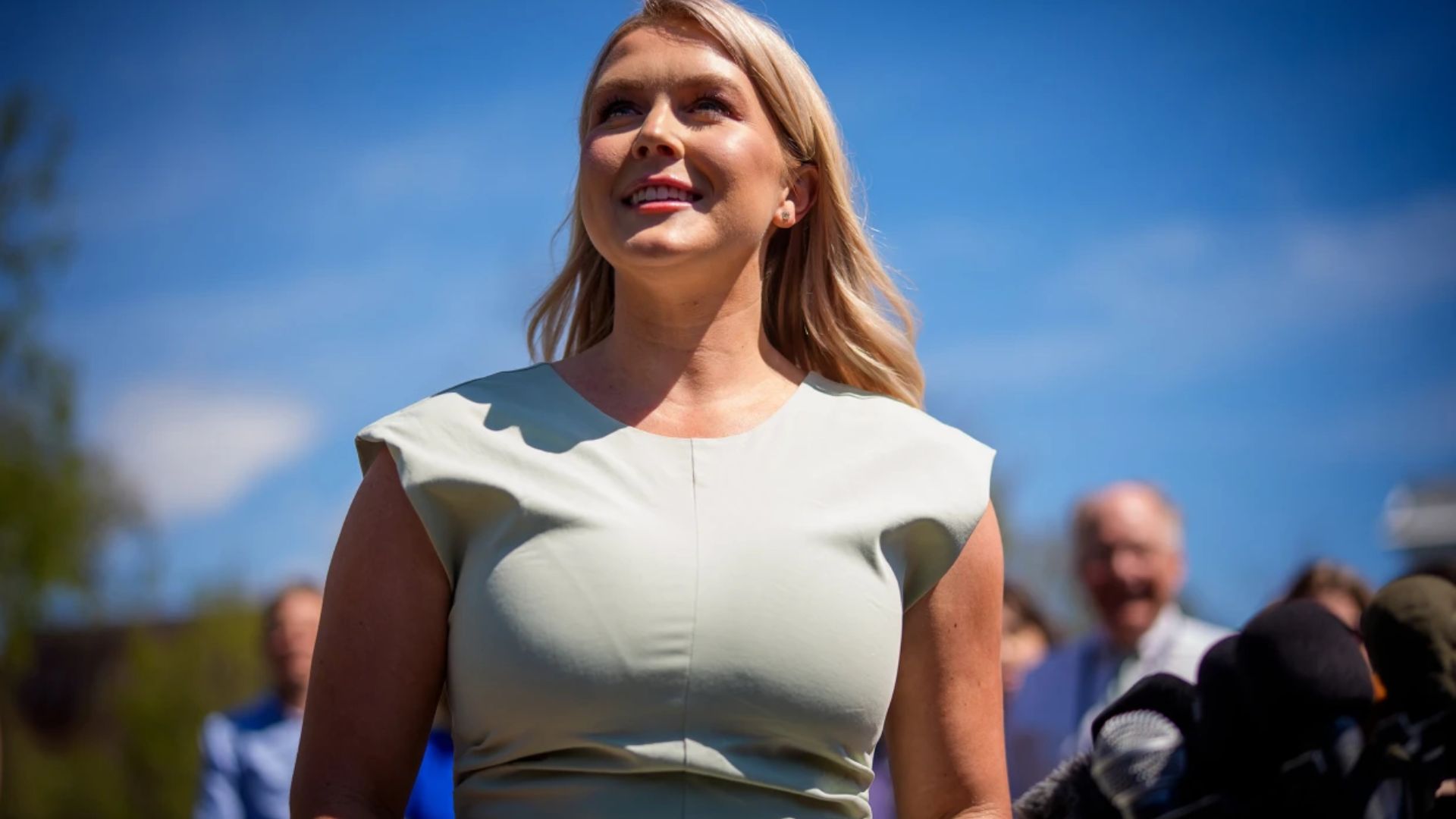
Karoline Leavitt is one of those names that suddenly starts appearing everywhere, and people naturally want to know who she is and why she matters. She represents something new in American politics: a very young, confident communicator who stepped into national conversations at an age when most people are still trying to figure out their first job. Her story is about ambition, timing, preparation, risk and the willingness to stand in the middle of strong opinions without backing away.
When you first hear about her, the headline facts are simple. She is a political communications professional who has worked in high profile roles, including serving in a previous presidential administration and later becoming a key spokesperson in national campaigns. She grew up in New Hampshire, far away from Washington, and did not come from the traditional elite background people often associate with national politics. That part of her story is important, because it shaped how she speaks, how she carries herself, and the kind of messages she focuses on.
This article looks closely at her early life, education, career path, public image, beliefs, and why she resonates so strongly with some people while being criticized by others. Along the way, I will also share small observations from my own experience watching young professionals enter demanding public roles, because her journey reflects a bigger pattern in modern political life.
Early life and family background
Karoline Leavitt was born and raised in New Hampshire. She grew up in a small-town environment where family businesses, close communities, and local traditions mattered. That upbringing gave her a sense of directness that shows up whenever she speaks publicly. She often describes her childhood as grounded in work, responsibility, and strong community values. Instead of being surrounded by political consultants or think-tank circles from a young age, she was surrounded by everyday people and local life.
In school she was active, competitive, and drawn to leadership roles. She took interest in communication early, enjoyed speaking, and liked being involved in activities where expressing ideas clearly was important. People around her noticed she was confident, organized, and comfortable being in front of others. Those traits later became her professional tools.
Growing up in New Hampshire also meant growing up in a state where national politics regularly passes through town halls, diners, and schools. Presidential candidates visit constantly. Campaigns are built around conversations with ordinary voters. It is easy to imagine how a politically curious student in that environment could be inspired to get involved.
Education and discovery of political communication
For college, Karoline chose to study subjects related to politics and communication. During these years she became more serious about public service and media. She joined campus organizations, debated ideas, and learned how messaging works behind the scenes. This was when she discovered that she was not only interested in politics as a subject but also in communicating politics as a profession.
Her internships played a huge role. She worked in government-related offices and communications environments where she learned how statements are written, how press responses are prepared, and how messages are shaped before reaching the public. Anyone who has worked in communications knows that this early exposure is priceless. It is often during internships that theory turns into real-world skill.
This is also where her work ethic showed. Instead of watching from a distance, she stepped directly into environments that would later define her career.
Entering national politics at a young age
Most people take years to reach national politics, but Karoline Leavitt moved quickly. After college she accepted roles in political communication, and before long she was working at the federal level. She served in Washington in communications roles that required discipline, loyalty, and precision.
Working in these positions means early mornings, long days, and constant pressure. Every word is examined. A small mistake becomes news. Watching someone that young handle that environment is interesting, because it shows how generational change is happening inside politics itself. Instead of politics being something only older professionals do, younger voices are stepping directly into central positions.
Later, she took on another major challenge: becoming a national press figure for a presidential campaign. That role does not just involve speaking on television. It means building relationships with reporters, preparing rapid responses, shaping daily narratives, and understanding how every statement connects to broader strategy. It requires a thick skin. It also requires calm confidence, because you are speaking in front of millions of people who may strongly disagree with you.
Running for Congress
At an age when many people are still building their resumes, Karoline Leavitt decided to run for Congress in New Hampshire. That choice alone says a lot about her mindset. It shows she was willing to place herself before voters and accept both support and rejection openly.
She won her party’s primary, which is never easy. That win proved she could organize a team, raise support, and convince a large number of people that she deserved their vote. Although she did not win the general election, the campaign itself raised her visibility nationwide and solidified her position as a rising political figure.
Anyone who has ever campaigned knows how demanding it is. You wake up early, shake countless hands, hear criticism face to face, repeat your message again and again, and live inside schedules tighter than any normal job. Losing after all that work can be painful. What matters is what a person does next. Karoline chose to continue.
Communication style and public presence
Karoline’s communication style is direct, confident, and steady. She does not speak in complicated sentences and does not try to sound overly academic. Instead, she uses simple language and clear points. This is one reason she connects with younger audiences who dislike formal political jargon.
She is also highly disciplined in message control. She rarely wanders off topic and stays aligned with the broader goals of the team she represents. Whether people agree or disagree with her politics, many acknowledge that she stays composed in tough moments.
Her age is another part of her presence. She represents a generation that grew up with digital media and fast news cycles. She understands how stories travel online and how quickly narratives can change. That awareness helps her operate in modern political communication more naturally than some older figures who had to adapt to it later.
Personal life and balancing public responsibility
Alongside her career, Karoline has a personal life that has attracted attention as well. She is open about valuing family, faith, and relationships. Public roles can easily consume people, but she emphasizes that her family remains central to her identity.
Balancing intense professional pressure with personal commitments is difficult. It involves constant travel, unpredictable schedules, and scrutiny of even private moments. Watching someone young manage this balance is interesting, because it shows how modern professional women are redefining work and family discussions in politics.
From a human perspective, you can see both the opportunity and the weight. There is excitement, history-making possibility, and pride. There is also responsibility, public judgment, and very little privacy. Being able to stay grounded through that is not simple.
Supporters and critics
Like most public figures in politics, Karoline Leavitt has strong supporters and strong critics.
Supporters see her as a symbol of generational change. They admire her confidence, loyalty to her beliefs, and willingness to challenge older political structures. They also view her as proof that age is not a barrier to serious responsibility. For many young women, she represents possibility: a reminder that high-level public roles are not reserved only for older voices.
Critics, on the other hand, question her political positions or communication choices. They sometimes focus on her style, her statements, or the teams she represents. This is normal in politics. Visibility always brings disagreement. What stands out is her ability to continue showing up and speaking despite criticism. That resilience defines political professionals more than any single speech.
What makes her stand out
Several qualities make Karoline Leavitt distinct in the current political landscape.
First, her age. She reached national attention much earlier than most people in similar roles. This alone reshapes expectations of what young professionals can do.
Second, her communication ability. She speaks in simple language without losing firmness. This helps messages travel beyond political insiders to everyday audiences who just want clarity.
Third, her background. Coming from a small-town environment rather than elite political families gives her story a relatable element, especially among voters who feel distant from Washington culture.
Fourth, her determination. Running for office, accepting losses, returning to demanding roles, and staying active in national debate requires unusual persistence.
A personal observation
From years of watching people enter public life, one pattern becomes clear. The ones who last are not always the most naturally talented speakers or the most academically decorated. The ones who last are the ones who can continue after being doubted, criticized, misrepresented, or defeated.
Karoline Leavitt fits that description. Whatever anyone thinks of her politics, she continues showing up. She accepts that her words will be discussed, praised, and attacked. She does not step back. That willingness to remain in the arena is what truly defines a public figure.
The bigger picture
Her story is also part of a larger shift happening in politics. Younger generations are no longer waiting until their fifties to enter national leadership conversations. They step in much earlier. They bring digital habits, different speaking styles, and new attitudes about work and life.
Karoline Leavitt represents that shift. She is not the only example, but she is one of the more visible ones. Her career suggests that American politics in the coming years will involve much younger voices in major roles, more women in top communication positions, and more people from ordinary backgrounds entering national space.
Looking ahead
Her future remains open. She could continue in political communication for many years, or she could run for office again. She could move into media, advocacy, or leadership roles in new organizations. At her age, almost every path remains available.
What is certain is that she has already left a mark. People now recognize her name. Journalists watch what she says. Supporters quote her. Critics respond to her. That alone means she has already stepped beyond the category of “unknown staffer” and into the realm of national figure.
Where she goes next will depend on opportunity, timing, and personal choice. But her story so far already illustrates how quickly life can change when preparation meets courage.
Closing thoughts
Karoline Leavitt’s journey is not just about politics. It is about youth, ambition, resilience, and identity in public life. It is the story of someone who started in a small New Hampshire community and walked into the center of national conversation before turning thirty.
Her rise reminds us that modern politics is not only shaped by long careers slowly building over decades. It can also be shaped by people who decide early that they are willing to take risks, speak publicly, and accept the consequences of visibility. Whether someone agrees or disagrees with her, there is value in understanding the path she took and the qualities that carried her forward.
About the Author